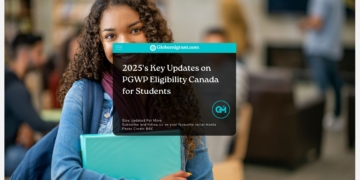



PGWP eligibility in Canada underwent major policy shifts in 2025, significantly reshaping the pathway for international students and recent graduates. These changes affect how students change schools, qualify for post-graduation work permits, and plan long-term immigration strategies.
Whether you are preparing to study in Canada or already hold a study permit, understanding these updates is critical to protecting your future work and permanent residence prospects.
Changes To School Transfers And Study Permits
In late 2024, Immigration, Refugees and Citizenship Canada (IRCC) revised the process for international students wishing to change their designated learning institution (DLI). Students are now required to apply for and receive approval for a new study permit before switching schools, rather than simply notifying IRCC through their online account, as was previously allowed . Here are some key changes to track:
1. PGWP Eligibility And Study Permit Timing
Students who received their initial study permit before November 1, 2024, remain exempt from the field-of-study requirements tied to PGWP eligibility. However, applying for a new study permit removes this exemption, making it especially important for students considering a school change to evaluate how it may affect their PGWP eligibility in Canada .
In 2024, IRCC introduced field-of-study restrictions for PGWP eligibility, requiring many students to graduate from programs linked to long-term labour shortages. This list was substantially revised in June 2025 and now includes 178 eligible programs that retain PGWP eligibility until further notice .
2. Restrictions On Spousal Open Work Permits
As of January 21, 2025, IRCC limited the issuance of open work permits for spouses or common-law partners of international students. Eligibility is now restricted to partners of students enrolled in master’s programs of at least 16 months, doctoral programs, or select professional programs in healthcare, education, and engineering.
Previously, spouses of students in shorter programs could also qualify.
3. Study Permit Caps And Admission Reductions
The federal government introduced a study permit cap for 2025, planning to process 550,162 applications and issue approximately 437,000 permits, a 10 percent reduction from 2024. By August 2025, only 89,430 new study permits had been issued, representing just 29 percent of the annual target.
Looking ahead, IRCC projected issuing 408,000 study permits in 2026, marking a further 7 percent decrease. These reductions align with broader efforts to ease housing pressures and reduce strain on public services .
4. Major Relief For Graduate Students In 2026
A notable shift begins January 1, 2026, when master’s and doctoral students will be exempt from Canada’s study permit cap and no longer required to submit a PAL or TAL . This change simplifies access to graduate education and removes cap-related processing constraints.
Additionally, from November 6, 2025, doctoral students applying from outside Canada will benefit from expedited processing, with decisions issued in as little as two weeks. Family members included in the application may also receive faster processing .
5. Financial Requirements And Application Documentation
Effective September 1, 2025, IRCC increased the proof-of-funds requirements for international students. A single applicant must now show at least $22,895 in living expenses, up from $20,635, in addition to tuition and travel costs .
IRCC also clarified the PGWP documentation requirements in December 2025, following many applications being refused due to missing language test results or field-of-study evidence. Applicants are now advised to combine all required documents into a single upload when submitting their PGWP application .
Key Takeaways
- Changing DLIs now requires prior approval of a new study permit.
- Applying for a new study permit can remove PGWP eligibility exemptions.
- Spousal open work permits are now limited to specific programs.
- Study permit caps continue to tighten through 2026
- Master’s and doctoral students benefit from major exemptions and faster processing.
Was this helpful?
Thanks for your feedback!