


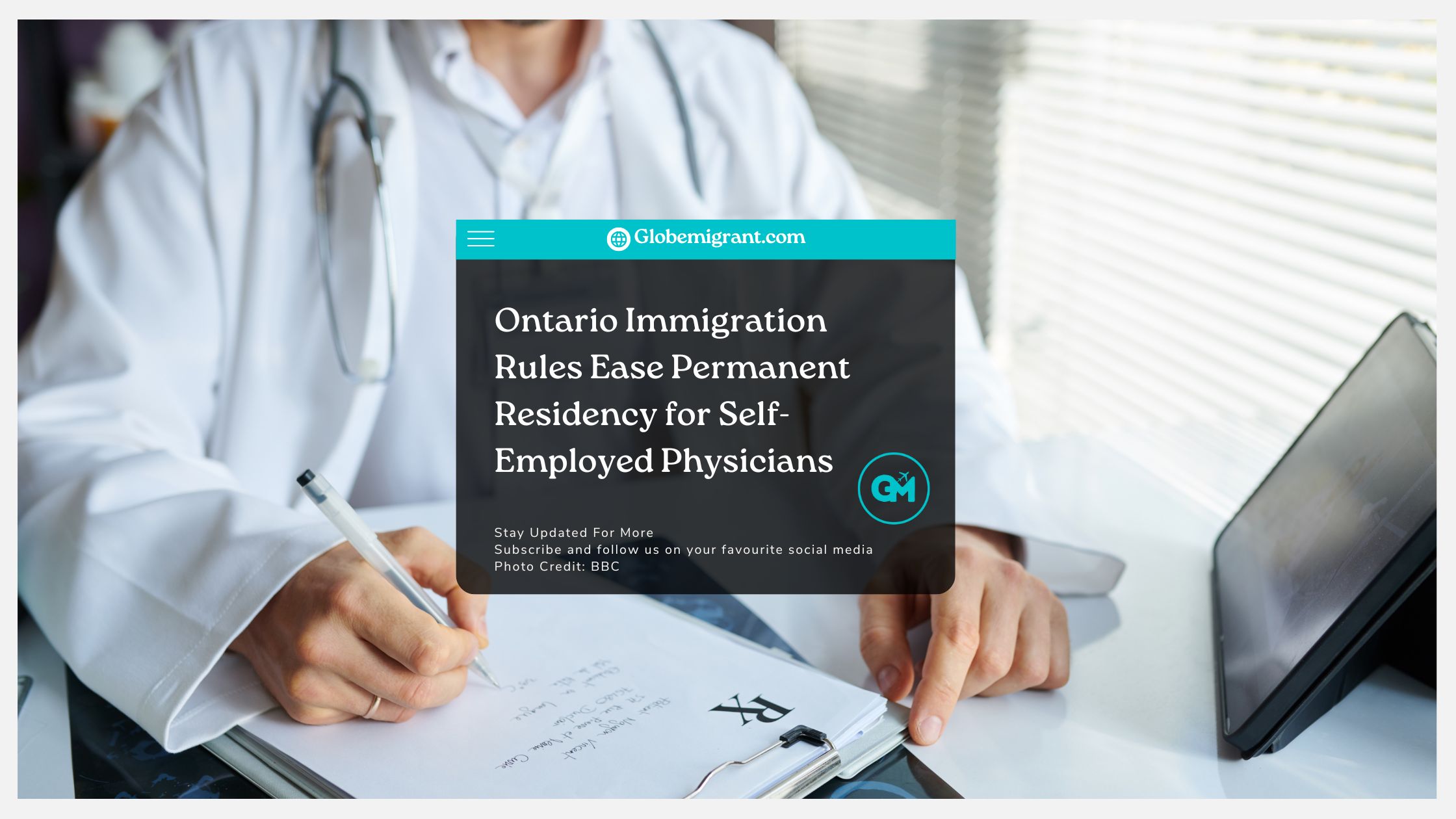
Ontario has implemented immigration rule changes designed to streamline permanent residency (PR) for self-employed physicians in Canada. These measures are part of a broader strategy to address critical healthcare staffing shortages and make immigration pathways more straightforward for medical professionals supporting Ontario’s health system as independent practitioners.
Under the updated framework, self-employed physicians (those who work in private practice rather than through traditional employment relationships) now have clearer eligibility criteria for provincial nomination through the Ontario Immigrant Nominee Program (OINP).
This change helps close a gap in the previous rules that unintentionally disadvantaged doctors who operate as independent contractors or owners of private clinics compared to those employed by larger health institutions.
What’s Changed in Ontario’s Immigration Policy?
Previously, Ontario’s nomination streams prioritized physicians in salaried positions at hospitals or clinics, requiring employer-specific job offers and regulatory support. Self-employed physicians often faced uncertainty about how their professional experience would be evaluated for nomination.
The new changes:
• Recognize self-employment experience in medical practice as valid work experience toward provincial nomination eligibility.
• Allow self-employed doctors to demonstrate their contribution through financial records, clinic ownership, and proof of patient care. Traditional employer documentation is not required.an meet criteria for the Health-Related Occupations stream in OINP or other relevant pathways aligned with Express Entry.
• Allow self-employed doctors to demonstrate their contribution through financial records, clinic ownership, and proof of patient care. Traditional employer documentation is not required.an meet criteria for the Health-Related Occupations stream in OINP or other relevant pathways aligned with Express Entry.
Ontario Ministry of Labour and OINP officials stated that these changes aim to attract more qualified physicians to underserved regions and strengthen Ontario’s healthcare workforce in meeting community needs.
Impact on Permanent Residency Pathways
For self-employed physicians, the revised rules provide a more direct path to permanent residency without restricting applicants to traditional employee classifications:
- Provincial nomination through Ontario’s streams can now consider independent practice as satisfying work experience requirements.
- Once nominated, physicians receive 600 extra CRS points for their Express Entry profile. This almost guarantees an Invitation to Apply (ITA) for permanent residency. their existing practice while transitioning to PR status without major disruptions to their employment. These changes complement existing federal immigration policies that offer pathways for doctors through the Canadian Experience Class (CEC) or the Federal Skilled Worker Program (FSWP), provided they meet the required work experience, language, and education criteria set by Immigration, Refugees and Citizenship Canada (IRCC).
Why Ontario Is Easing Rules for Self-Employed Physicians
Ontario’s healthcare sector has been under significant strain due to physician shortages in urban and rural areas. Self-employed physicians often fill critical gaps, especially where employer-based roles are limited or less flexible. Reasons why Ontario is easing rules for self-employed physicians also includes:
- Ontario expands its recruitment potential for skilled medical talent.
- Physicians who contribute independently can be rewarded with stability through PR.
- The province enhances its ability to retain internationally trained doctors already practising in Ontario.
Healthcare leaders have endorsed the update, noting that more inclusive immigration criteria can broaden patient access to care across Ontario’s communities.
What Self-Employed Physicians Should Do Next
Physicians interested in using the updated pathway should:
- Ensure regulatory licensure with the College of Physicians and Surgeons of Ontario (CPSO).
- Prepare documentation that demonstrates self-employment and sustained medical practice in Ontario, such as:
- Clinic ownership or partnership agreements
- Financial statements showing professional income
- Proof of patient consultations and services provided
- Create or update an Express Entry profile if eligible.
- Submit an OINP application under the relevant health-related occupational stream.
Applicants should also seek guidance from immigration professionals to ensure all criteria are satisfied.
Key Takeaways
- Ontario has updated its immigration rules to make PR more attainable for self-employed physicians.
- Self-employment experience in medical practice now counts toward provincial nomination eligibility.
- A successful nomination adds 600 CRS points, greatly improving chances of an ITA through Express Entry. The changes aim to help Ontario address physician shortages and attract skilled healthcare professionals.
- Self-employed doctors should update their Express Entry profiles and prepare strong documentation of independent practice.
Was this helpful?
Thanks for your feedback!