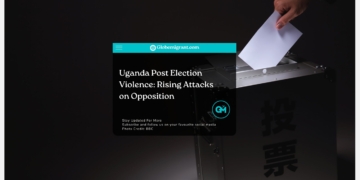



Uganda post election violence has intensified after presidential polls held on January 15, 2026, with security forces accused of targeting opposition figures and supporters. Human Rights Watch reports widespread abuses, including mass arrests, enforced disappearances, and intimidation directed at members of the opposition National Unity Platform.
Security forces placed the home of opposition leader Robert Kyagulanyi, widely known as Bobi Wine, under military siege following the announcement of election results. Movement restrictions, property damage, and assaults on family members and staff were reported as pressure mounted against Kyagulanyi, who challenged long serving president Yoweri Museveni, declared winner of a seventh term.
According to Ashwanee Budoo-Scholtz, deputy Africa director at Human Rights Watch, abuses against opposition members have reached a critical level. Calls were made for authorities to immediately halt repression and guarantee safety for political opponents.
Kyagulanyi stated that a military raid on his residence forced him into hiding after electricity and surveillance systems were disabled. Subsequent raids occurred in his absence, with his wife, Barbara Kyagulanyi, reporting physical assault and attempts by armed men to seize her phone. Footage later shared online showed significant damage to the property.
Escalating tensions followed threats made by Muhoozi Kainerugaba, commander of Uganda’s military and son of President Museveni. Statements posted online referenced killings of opposition supporters and included direct threats against Kyagulanyi, intensifying fears of further violence.
How This Impacts Uganda’s Democracy
Enforced disappearances also raised alarm. Jolly Jackline Tukamushaba, deputy president of the National Unity Platform for Western Uganda, was detained by soldiers during election activities and has remained missing since. Another senior party official, Lina Zedriga Waru, was reportedly abducted by soldiers using military vehicles, according to family accounts shared with Human Rights Watch.
Post election repression extended beyond political leaders. Hundreds of opposition supporters and journalists were reportedly arrested during rallies, while authorities imposed a nationwide internet shutdown days before voting, limiting access to election information. More than 118 opposition supporters faced court charges linked to election related activities in the days that followed.
Ugandan law, alongside international human rights standards, prohibits arbitrary detention, torture, and enforced disappearances. Legislation such as the Prevention and Prohibition of Torture Act of 2012 and the Human Rights (Enforcement) Act of 2019 criminalizes these abuses by public officials. Human Rights Watch urged investigations, accountability, and international pressure to end violations against political opponents.