


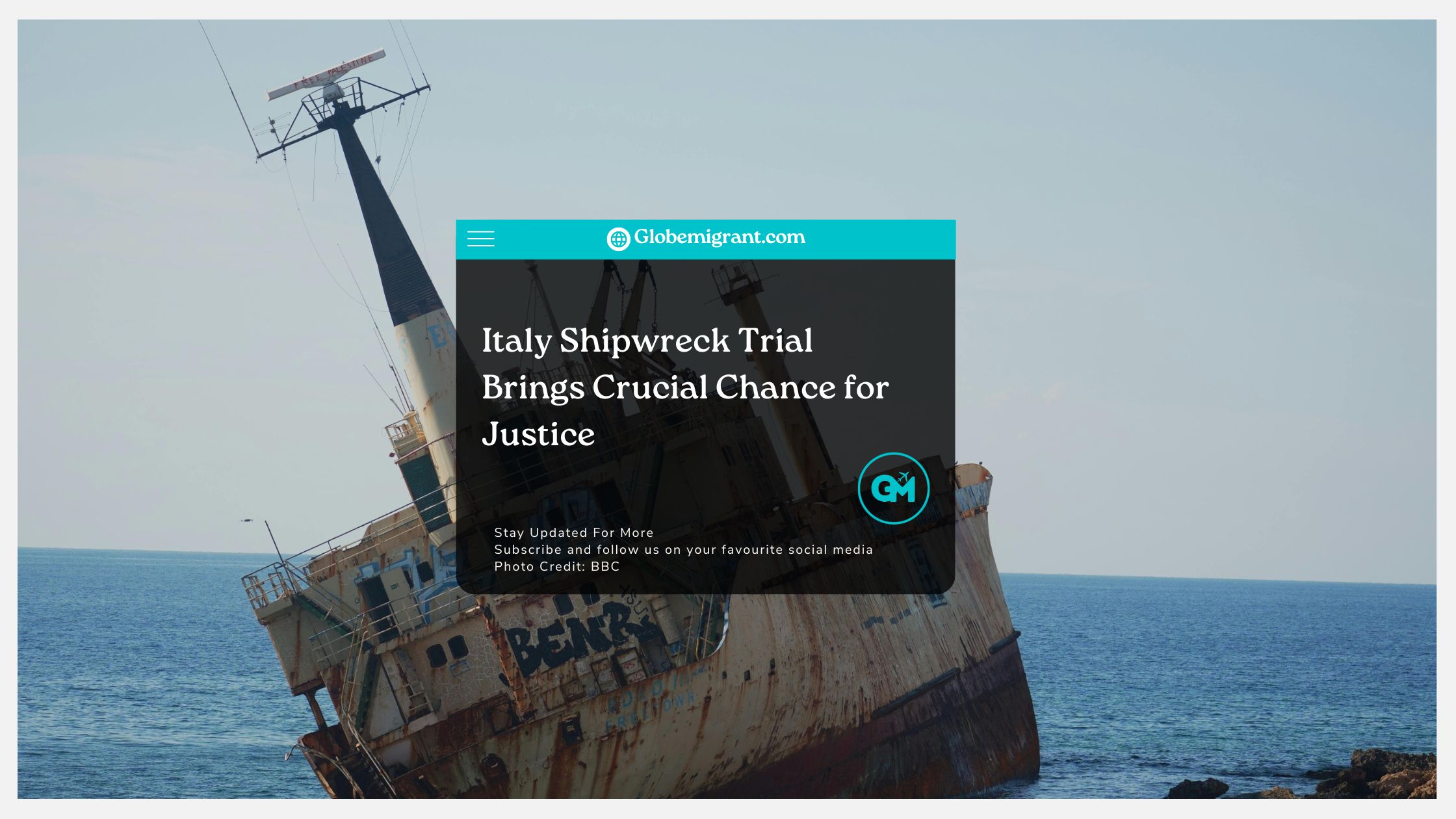
Italy shipwreck trial begins this week, offering a vital opportunity for justice regarding the tragic shipwreck that claimed at least 94 lives on February 26, 2023, near Steccato di Cutro, Calabria. Relatives of those who went missing after the migrant boat sank are seeking accountability for the incident, which has drawn significant attention in recent months. Human Rights Watch emphasizes the importance of this trial for migrants and asylum seekers lost at sea. Scheduled for January 30 in Crotone, Italy, the trial reignites discussions about Italy’s policies regarding migrants.
The charges involve six Italian officials, including two from the Coast Guard and four from the Customs Police (Guardia di Finanza), accused of negligence that led to the sinking. This event is commonly referred to as the “Cutro shipwreck,” named after the nearby village. Judith Sunderland, acting deputy director for Europe and Central Asia at Human Rights Watch, stated, “The Italy shipwreck trial represents a crucial moment for truth and justice for survivors and victims’ families, as well as an opportunity to prevent future tragedies.”
The courtroom is located close to where the wooden vessel capsized due to rough sea conditions. Of the estimated 180 to 250 people aboard—most hailing from Afghanistan, Syria, and Pakistan—only 80 survived, while 94 bodies, including 35 children, were recovered. Some passengers remain missing. Notably, the EU border agency Frontex had notified Italian authorities of the boat’s distress hours before it sank. Despite the clear signs of trouble, Italian authorities failed to initiate a search-and-rescue mission.
Instead of prioritizing the rescue, the Customs Police opted for a law enforcement approach, dispatching two patrol boats that eventually retreated due to adverse weather. Following a lengthy investigation lasting over two years, the Crotone public prosecutor formally charged the officers in July 2025. A total of 65 survivors and six humanitarian organizations—such as EMERGENCY and Sea-Watch—are involved as civil parties in the case.
Data from the International Organization for Migration reveals a staggering number: over 33,200 individuals have died or disappeared in the Mediterranean since 2014. The woeful response from Italy and other EU nations to migrant boats in distress—including the June 2023 tragedy near Pylos, Greece—has contributed significantly to these deaths. The European Court of Human Rights established that, as a signatory to the European Convention on Human Rights, Italy must protect the right to life, which necessitates timely rescue efforts for those in peril.
Additionally, Italian authorities are bound by the International Convention on Safety of Life at Sea and the International Convention on Maritime Search and Rescue to act promptly in distress situations. According to EU regulations on maritime border surveillance, various factors, such as vessel seaworthiness and weather conditions, must be considered to determine a distress situation.
Sunderland warned that this case should serve as a wake-up call for both Italian and European authorities. She asserted, “When lives are at risk at sea, the primary obligation is to prioritize their safety promptly.” This Italy shipwreck trial has the potential to reshape policies towards migrants and highlight the need for humane treatment in rescue operations.
Italy Shipwreck Trial Opens Critical Path To Justice
This Article is Free for Subscribers
Access 2000+ premium insights, visa updates, and global lifestyle stories all in one place. <div> For Subscribers, Login here