


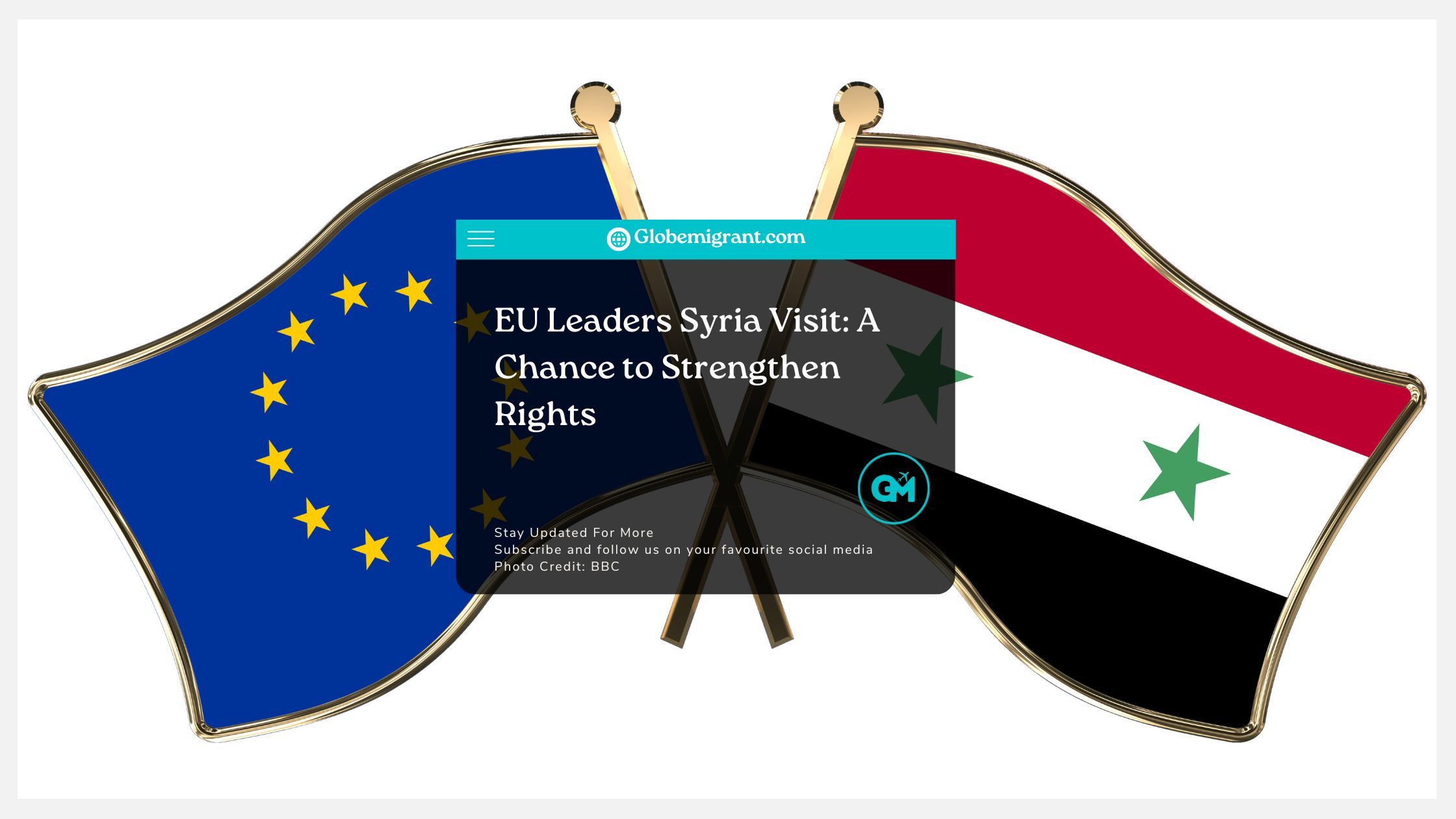
EU leaders are preparing for a highly symbolic and politically significant visit to Syria at a moment when the country’s future direction remains deeply uncertain. European Commission President Ursula von der Leyen and European Council President Antonio Costa are scheduled to meet Syrian officials in Damascus on January 9, 2025, marking the first official visit by EU leaders since the conflict began. The timing of this visit positions Europe to play a critical role in influencing Syria’s transition toward stability, accountability, and respect for human rights.
The focus of the meetings is expected to center on Syria’s economic recovery and reconstruction. Years of war, international isolation, and economic collapse have left much of the country devastated. In May 2025, the European Union lifted all remaining sanctions on Syria, signaling a willingness to re-engage and support rebuilding efforts. Syrian authorities now look to Europe for financial assistance, investment, and political legitimacy as they attempt to stabilize the economy.
Linking Reconstruction To Human Rights
History offers a clear warning about post-conflict reconstruction that ignores human rights. Financial assistance provided without strong accountability mechanisms often fuels corruption, entrenches abusive power structures, and deepens inequality. EU leaders, therefore, face a responsibility to make clear that economic cooperation depends on concrete commitments to the protection of rights and the prevention of future abuses.
Since the fall of the Assad regime in December 2024, EU institutions have publicly reaffirmed support for the rights of all Syrians. Turning those commitments into enforceable conditions remains essential. Economic recovery cannot succeed if security forces and affiliated groups continue to act with impunity.
Ongoing Abuses Underscore Reform Needs
Over the past year, serious human rights violations have been documented against minority communities, particularly in Sweida and Syria’s coastal regions. Transitional authorities and aligned armed groups have been implicated in abuses that include unlawful killings, arbitrary detentions, and intimidation. These violations highlight the urgent need for comprehensive security sector reform as part of any credible transitional justice process.
Accountability remains a cornerstone of long-term peace. European leaders have spent more than a decade supporting international accountability mechanisms related to Syria. Continued leadership is required to ensure independent investigations and fair trials for crimes committed during and after the conflict. Victims and survivors deserve justice that is not delayed or diluted for political convenience.
Refugee return is expected to be a key discussion point during the visit. Millions of Syrians remain displaced across the region and in Europe. Encouraging returns without addressing safety, livelihoods, and rights risks exposes returnees to renewed harm. EU leaders must resist pressure to portray Syria as safe before conditions genuinely support voluntary, informed, and dignified returns.
Symbolic gestures and diplomatic optimism are not enough. Syrians emerging from decades of repression and violence require tangible guarantees that their rights will be protected regardless of ethnicity, religion, or political views.
Europe’s Responsibility In Syria’s Transition
Opportunities presented by this visit extend beyond diplomatic engagement. Europe holds significant leverage through financial aid, political recognition, and technical assistance. Using that influence responsibly means supporting a Syrian-led transition grounded in accountability, inclusion, and respect for fundamental freedoms.
Success will depend on clarity and consistency. Economic support should advance justice rather than undermine it. Engagement should empower civilians rather than abusive institutions. Decisions made during this visit may shape Syria’s trajectory for years to come.
Was this helpful?
Thanks for your feedback!