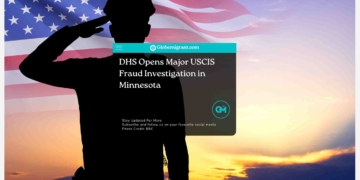




The USCIS fraud investigation has taken a major turn as the US Department of Homeland Security has launched a large-scale enforcement and verification initiative in Minnesota. The operation, known as Operation PARRIS, is being carried out by the US Citizenship and Immigration Services with the support of other federal agencies. The focus is on reassessing refugee cases to ensure the integrity of the US immigration system and address potential misuse of humanitarian pathways.
The investigation initially targets approximately 5,600 refugees residing in Minnesota who have not yet adjusted their status to lawful permanent residence. Federal authorities have confirmed that cases involving suspected fraud or criminal conduct are now being referred to Immigration and Customs Enforcement for further action. According to DHS, this effort represents a broader push to strengthen immigration screening and enforcement nationwide.
What Is Operation PARRIS And Why It Matters
Operation PARRIS, which stands for Post-Admission Refugee Reverification and Integrity Strengthening, is being coordinated through a newly established USCIS vetting center. The program involves detailed background checks, reinterviews, and verification of original refugee claims made during the admission process.
DHS officials have stated that Minnesota has become a focal point due to prior findings of systemic fraud in refugee and immigration filings. A DHS spokesperson described the operation as a decisive step to combat abuse of the immigration system while prioritizing national security and public safety.
The operation reflects the administration’s intent to ensure that humanitarian protections are not exploited for unlawful purposes.
Legal Authority Behind The Investigation
The USCIS fraud investigation is being conducted under the authority of Executive Order 14161 and Presidential Proclamation 10949. These directives require federal agencies to implement enhanced screening and vetting measures to identify individuals who may pose security risks or who obtained immigration benefits through misrepresentation.
Under these directives, USCIS is obligated to reassess previously approved cases when new information arises or when systemic vulnerabilities are identified.
This includes cooperating with ICE on enforcement actions when fraud, criminal activity, or security threats are discovered. More details on DHS enforcement authority can be found at
Refugee Reverification And ICE Referrals
As part of Operation PARRIS, USCIS officers are conducting in-depth reviews that may include biometric checks, document authentication, and in-person interviews. Refugees whose cases raise red flags may face administrative delays, denial of adjustment applications, or referral to ICE for investigation and potential removal proceedings.
ICE involvement signals a shift from administrative review to enforcement when fraud is suspected. This approach mirrors earlier operations where immigration benefits were revoked after evidence of misrepresentation was uncovered.
Link To Previous Minnesota Fraud Investigations
This investigation builds on the findings of Operation Twin Shield, a prior USCIS-led initiative that exposed widespread immigration fraud in the Minneapolis-St Paul region. That operation revealed coordinated schemes involving falsified documents, fabricated claims, and misuse of refugee and asylum programs.
Federal officials have stated that lessons learned from Operation Twin Shield directly informed the design of Operation PARRIS. The goal is to prevent repeat exploitation of humanitarian pathways while restoring confidence in the refugee admissions system.
Impact On Refugees And Immigration Applicants
While DHS has emphasized that the operation is not targeting refugees based on nationality or religion, the scale of the review has raised concerns among immigrant communities. Refugees undergoing reverification may experience delays in green card processing and increased scrutiny of their original claims.
Immigration advocates have urged affected individuals to ensure their records are accurate and to seek legal guidance if contacted by USCIS or ICE.
Key Takeaways
- DHS and USCIS have launched Operation PARRIS to reassess refugee cases in Minnesota
- Approximately 5,600 refugees without green cards are included in the initial review
- Cases involving suspected fraud are being referred to ICE for enforcement action
- The investigation is conducted under Executive Order 14161 and Presidential Proclamation 10949
- The operation builds on earlier fraud findings from Operation Twin Shield
The USCIS fraud investigation in Minnesota signals a broader federal effort to reinforce the integrity of the immigration system through post-admission review and enforcement. Refugees and applicants should remain informed, maintain accurate documentation, and seek professional advice when necessary, as similar verification initiatives may expand to other states in the future.
Was this helpful?
Thanks for your feedback!