



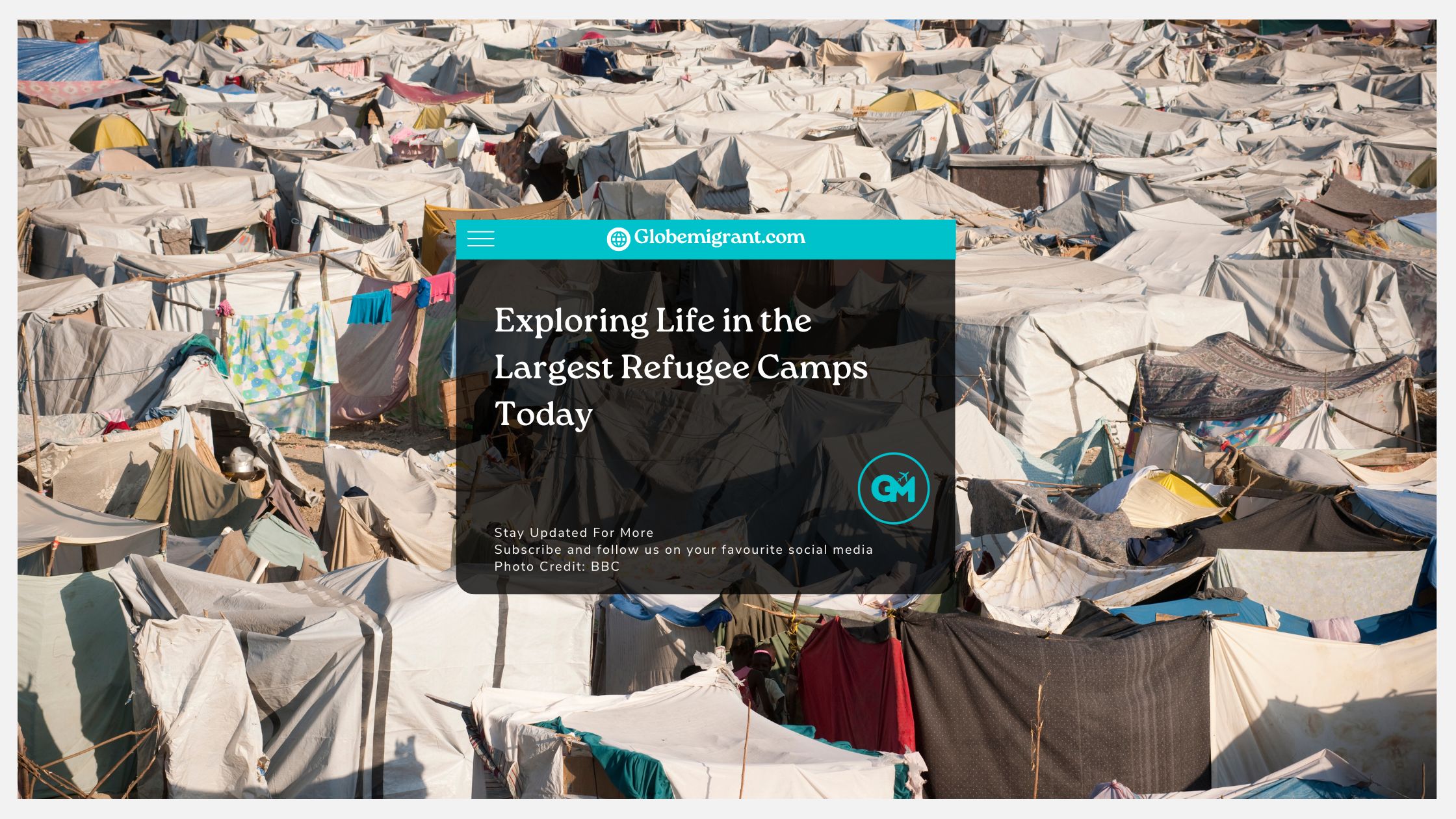
The world’s largest refugee camp is located in Cox’s Bazar, Bangladesh, where more than one million Rohingya refugees continue to live after fleeing unimaginable violence in Myanmar following the 2017 military crackdown. According to the UN Refugee Agency (UNHCR), the camps are among the most densely populated humanitarian settings globally, where families endure daily hardships, extreme congestion, and uncertainty that affects every aspect of their lives.
Amber Mezbourian (humanitarian worker) , from Jersey, began working in Cox’s Bazar in early 2025 as a UN Junior Professional Officer. Her position is funded by Jersey Overseas Aid (JOA), a program that strengthens Jersey’s international humanitarian efforts.
Living Conditions Inside The Camps
UNHCR described the camps as severely overcrowded, explaining that refugees are confined to an area nearly five times smaller than Jersey. She recalled seeing shelters made from bamboo and tarpaulin, flimsy against searing heat, relentless monsoon rains, or powerful cyclones. Thin walls offer only the barest privacy, and families often live just inches apart, each day marked by an unyielding lack of space and a longing for safety. The resilience shown in such daily struggles is both heartbreaking and inspiring.
Instability and conflict in Myanmar prevent large-scale voluntary returns, leaving refugees in prolonged displacement with few long-term options.
UNHCR works alongside international and local partners to provide protection, shelter, healthcare, education, and essential services to refugees in Cox’s Bazar. In her role, Amber Mezbourian (humanitarian worker) supports high-level meetings, prepares policy briefs, drafts reports, and coordinates donor visits, helping to connect funding partners with realities on the ground.
These behind-the-scenes efforts play a critical role in sustaining international support for one of the world’s most complex humanitarian crises.
Relocation Efforts To Bhasan Char
To ease congestion in Cox’s Bazar, the Bangladesh government began relocating refugees to Bhasan Char, a purpose-built island. Mezbourian noted that Bhasan Char offers wider roads, more structured housing, and greater open space than Cox’s Bazar.
Refugees there participate in sewing, art, dance, and educational programmes focused on rights awareness and personal development. Witnessing women and girls regain a sense of dignity and agency, despite having endured unimaginable loss, left a lasting impression of courage and resilience.
The structured layout of Bhasan Char has enabled humanitarian agencies, including UNHCR and its partners, to implement support programmes more efficiently. Housing units are more uniform and durable, and the availability of open space creates opportunities for community activities that are difficult to sustain in the congested conditions of Cox’s Bazar.
While some refugees struggle with feelings of isolation due to separation from family members who remain in the mainland camps, the island’s infrastructure has provided a more orderly and less chaotic living environment for those relocated.
Key Takeaway
Cox’s Bazar is the world’s largest and most overcrowded refugee camp, with over one million Rohingya refugees living in prolonged displacement. While initiatives like Bhasan Char provide partial relief, long-term solutions depend on sustained international support, protection efforts, and political progress in Myanmar.
The experiences shared by humanitarian workers like Amber Mezbourian offer a rare and vital window into the daily reality of life inside the world’s largest refugee camps: moments of sorrow, perseverance, and hope unfold against a backdrop of uncertainty. As displacement becomes an ever more enduring crisis worldwide, continued funding, policy attention, and global cooperation remain essential to ensuring safety, dignity, and a glimmer of hope for millions of refugees.
Was this helpful?
Thanks for your feedback!