



Express Entry 2025 has been pivotal in reshaping Canada’s main application management system for prospective immigrants. The changes this year, especially the elimination of points for arranged employment and the revamping of categories, significantly impacted candidates’ chances of receiving an Invitation to Apply (ITA) for permanent residence (PR).
In this post, we discuss which candidates emerged as priorities in the 2025 Express Entry draws, how invitations were allocated, and the policy shifts that occurred throughout the year.
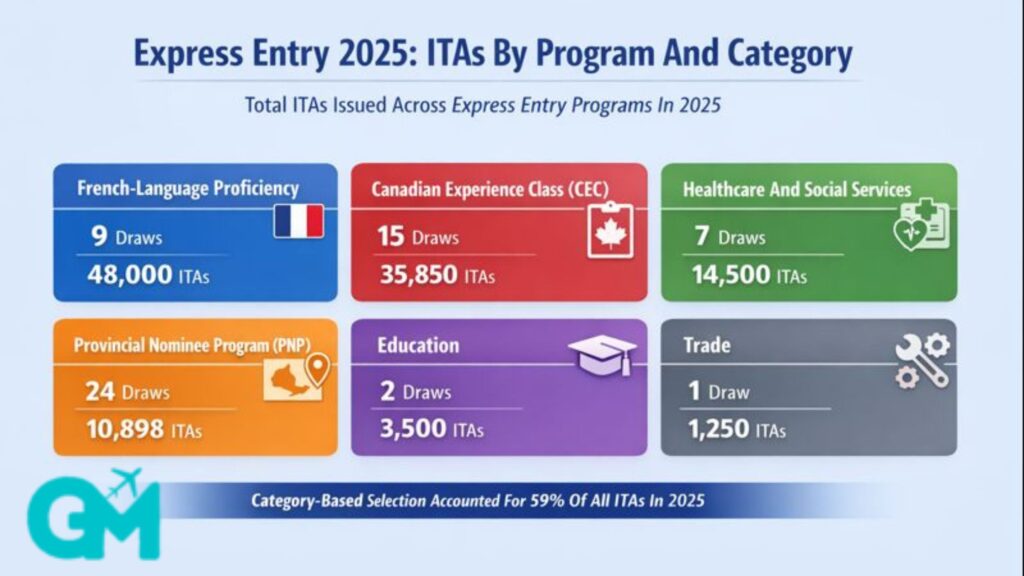
ITAs By Program And Category
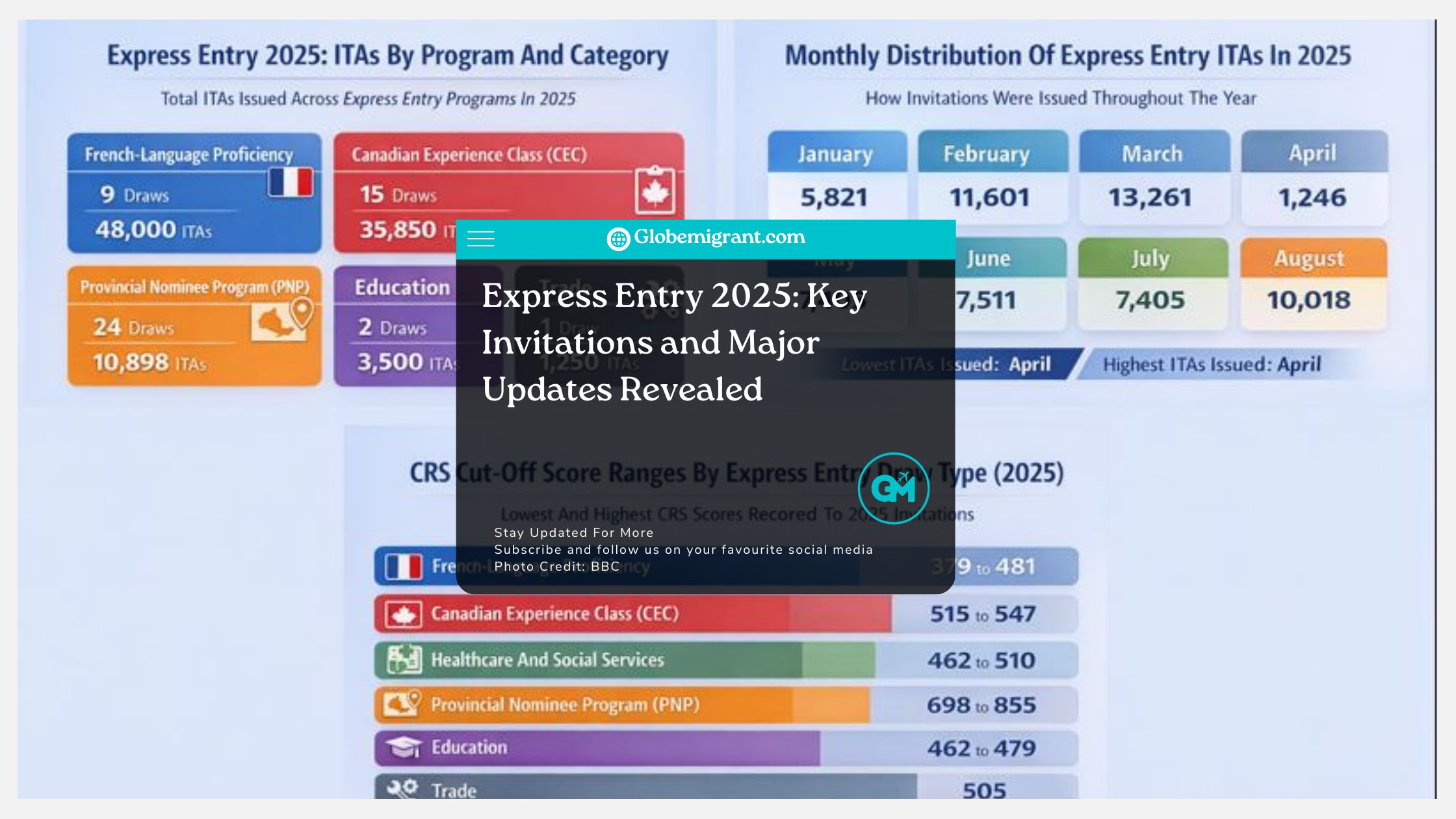
In 2025, Immigration, Refugees and Citizenship Canada (IRCC) distributed a total of 113,998 ITAs across 58 Express Entry draws, an increase of 15,195 ITAs from 2024, which had 52 draws. Over half (59%) of these ITAs were awarded through category-based selection, while the remaining came from Canadian Experience Class (CEC) and Provincial Nominee Program (PNP) draws. Between January and the end of April, the immigration department primarily focused on CEC, PNP, and French-language draws, later diversifying selections to include additional categories, particularly in healthcare and social services.
ITAs By Month
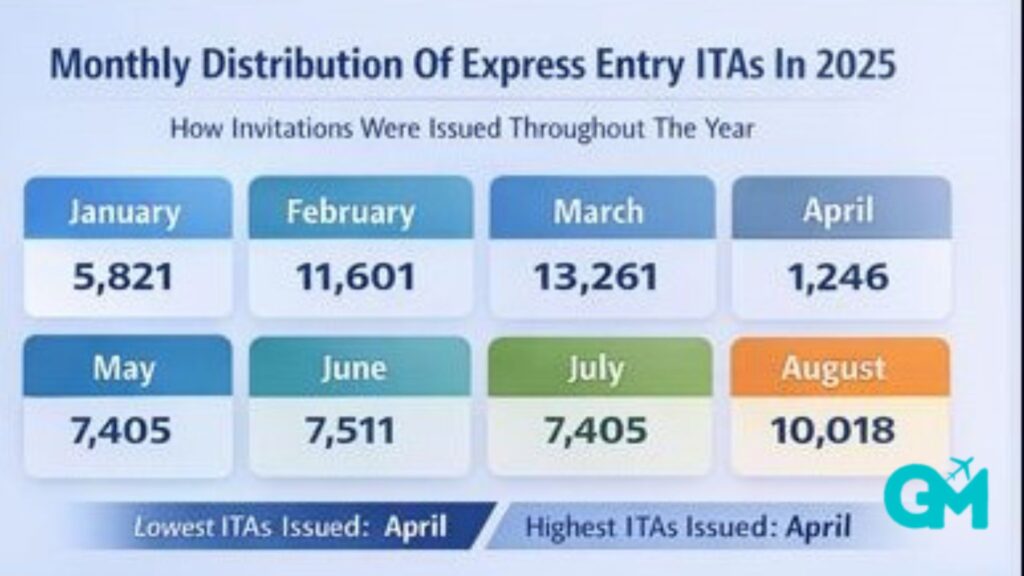
IRCC notably ramped up ITA issuances from September to December, with earlier months showing lower issuance rates. December achieved the highest share of ITAs in a single month for the year, accounting for 17% of all 2025 issuances, while April recorded the lowest with just about 1%.
CRS Cut-Off Scores By Category
The Comprehensive Ranking System (CRS) score cut-offs for the 2025 Express Entry draws showed significant variation across programs and categories, with most draw types setting higher cut-offs this year. Category-based rounds allowed eligible lower-ranking candidates a chance at PR. French-language draws featured the lowest scores, falling into the high 300s, while PNP draws had the highest cut-offs.
The 2025 Express Entry updates reflect Canada’s evolving immigration priorities, emphasizing candidates with French-language proficiency, experience in healthcare, social services, trades, and education. The increase in category-based ITAs, monthly fluctuations, and changes to CRS scoring illustrate the government’s intent to focus on both economic needs and candidates already residing in Canada.
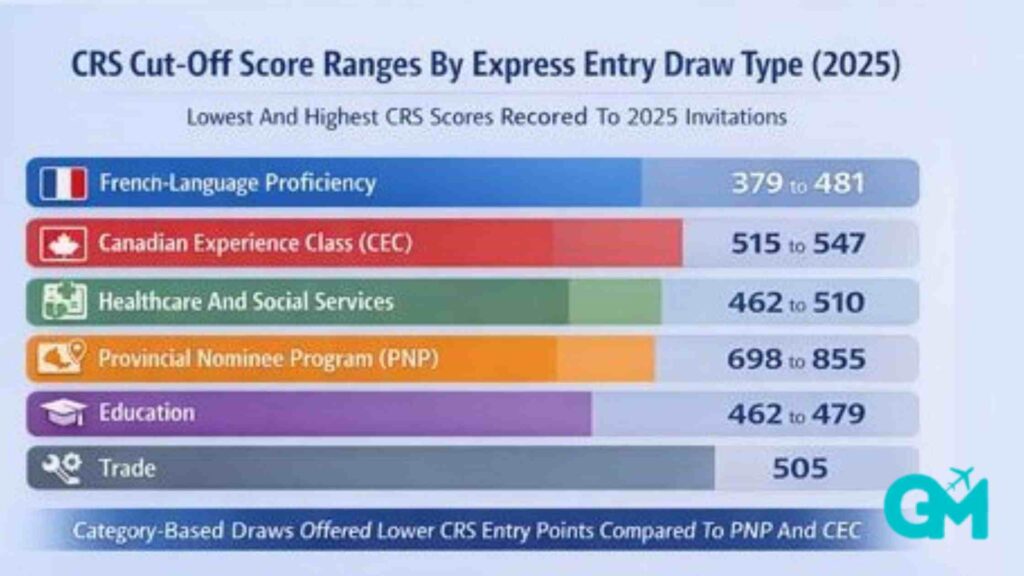
Prospective immigrants should carefully review these trends and prepare their applications in accordance with the latest rules to improve their chances of receiving an ITA.
Key Takeaways
This Article is Free for Subscribers
Access 2000+ premium insights, visa updates, and global lifestyle stories all in one place. <div> For Subscribers, Login here
Login if you have purchased