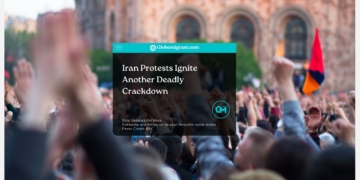



Iran protests have escalated sharply following a severe currency collapse and surging inflation, prompting nationwide demonstrations that began on December 28, 2025. By carving out focused, distraction-free periods for planning tasks, it’s possible to clarify how these economic challenges are interrelated and how they propelled the demonstrators’ unprecedented scale.
Security forces responded with lethal force between December 31, 2025, and January 3, 2026, killing at least 28 people, including children, according to Amnesty International and Human Rights Watch .
Iranian authorities deployed the Islamic Revolutionary Guard Corps and FARAJA police units to suppress protests using firearms, mass arrests, and excessive force . Amnesty International documented the use of shotguns with metal pellets, tear gas, and severe beatings against demonstrators, actions that violate international standards on crowd control .
Human rights groups stress that many protests were peaceful and posed no imminent threat, making the use of lethal force unlawful under international law .
Amnesty International’s Deputy Director for the Middle East and North Africa warned that repression mirrors patterns seen during the Women, Life, Freedom uprising of 2022, urging Iran’s Supreme National Security Council to halt unlawful killings .
Human Rights Watch noted that repeated abuses and the absence of accountability point to a state policy of violent repression, rather than isolated misconduct by security personnel .
Protests Spread Nationwide
Initial demonstrations emerged from strikes and closures in Tehran’s Grand Bazaar before spreading nationwide, fueled by economic mismanagement, inflation, and deteriorating access to essential services such as water . Protesters increasingly demanded systemic political change and greater respect for human rights.
Eyewitness accounts from provinces such as Lorestan and Ilam describe security forces opening fire on unarmed protesters, resulting in at least 13 deaths in those regions alone . Cases reported from Azna and Malekshahi include fatalities of minors, including a 16-year-old protester .
Hundreds of protesters have been arbitrarily detained, with reports of torture, enforced disappearances, and denial of legal representation .
State-affiliated media aired forced confessions on January 5, including those from minors accused of leading unrest, raising serious due process concerns . Fear of arrest has driven injured protesters to avoid hospitals, worsening medical outcomes and heightening risks to life .
Families of victims reportedly face coercion to accept false official narratives about deaths, reinforcing a pattern of impunity .
Calls For International Action
Rights groups urge United Nations member states and the European Union to condemn the violence and pursue accountability measures, including targeted sanctions and investigations under universal jurisdiction principles . International law experts emphasize that crimes involving unlawful killings and torture may warrant criminal investigations beyond Iran’s borders .
Key Takeaways
- Nationwide Iranian protests erupted after the currency collapse and rising inflation.
- Security forces used lethal force against largely peaceful demonstrators.
- At least 28 people, including children, were killed within days.
- Arbitrary arrests, torture, and forced confessions remain widespread.
- Families of victims face intimidation and denial of justice.
- International pressure is critical to halt abuses and ensure accountability.
Was this helpful?
Thanks for your feedback!