



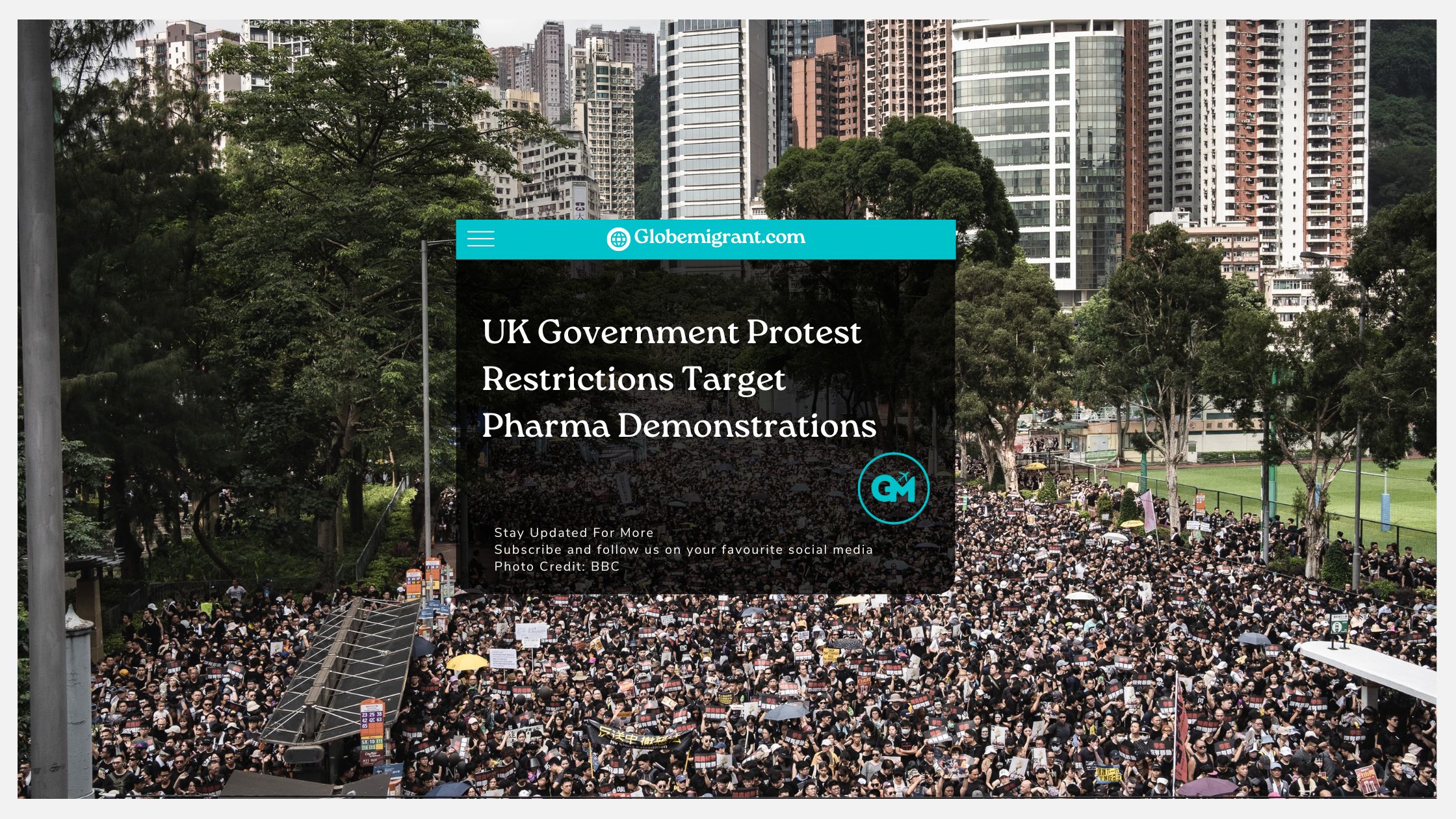
UK government protest restrictions are sparking significant concern as lawmakers consider an amendment to the Public Order Act 2023 (POA) on January 14, 2026. The proposal seeks to classify “life sciences” facilities, including pharmaceutical and healthcare sites, particularly those involved in animal testing, as “key national infrastructure.” If passed, organizers and participants in protests at these sites could face criminal penalties of up to 12 months in prison.
These restrictions could heavily impact demonstrations on animal testing, access to medicines, corporate accountability, and drug safety. Human Rights Watch’s report Silencing the Streets: The Right to Protest Under Attack in the UK highlights a worrying trend of diminishing space for peaceful protest.
Escalating Legal Measures Against Protests
Since 2022, UK legislation has increasingly empowered police to limit assemblies deemed noisy or disruptive. Actions traditionally considered part of peaceful protest are now criminalised, with some resulting in imprisonment. The designation of Palestine Action as a terrorist organization has also expanded the application of terrorism laws against otherwise nonviolent activists, leading to thousands of arrests.
The proposed amendment’s wording: referring to protests that “interfere with the use or operation” of designated sites is highly ambiguous. This could allow authorities to criminalize even minor demonstrations, such as holding signs outside corporate offices, simply due to employee inconvenience or perceived disruption.
Under the European Convention on Human Rights and the International Covenant on Civil and Political Rights, the UK is obligated to protect the rights to freedom of expression and peaceful assembly. Any restrictions must be lawful, necessary, and proportionate.
Economic disruption or discomfort for businesses does not justify blanket bans on protest. The European Court of Human Rights consistently upholds the right to peaceful assembly, even when it causes some disturbance.
Potential Impact
If enacted, this amendment would further limit the avenues for public dissent on critical issues such as scientific ethics, healthcare access, corporate responsibility, and animal welfare. The legislation could deter civic engagement and undermine democratic principles by criminalizing legitimate, peaceful forms of protest.
It is essential that Parliament carefully considers the human rights consequences before passing this amendment. Protecting the right to protest is fundamental to a functioning democracy and the rule of law.
Under the European Convention on Human Rights and the International Covenant on Civil and Political Rights, the UK is obligated to uphold the rights to freedom of expression and peaceful assembly. Any restrictions enforced must be lawful, necessary, and proportionate in pursuit of a legitimate goal. Economic inconvenience or discomfort for businesses does not justify sweeping prohibitions on protest. Moreover, the European Court of Human Rights has consistently upheld the right to peaceful assemblies that may cause a level of disruption.
Should this amendment become law, it stands to further restrict the venues and methods by which individuals can voice dissent on public interest issues like healthcare, corporate behavior, scientific ethics, and animal welfare. It is imperative that Parliament votes against this amendment. A democracy committed to the rule of law must defend the right to protest.
Was this helpful?
Thanks for your feedback!