



UK migration numbers are approaching pre-COVID levels, with official data showing a decrease in net migration. Net migration is the difference between immigration and emigration. The Office for National Statistics (ONS) rounds this figure, so it may not exactly match actual totals.
These numbers provide a clearer picture of changes in asylum, visas, small boat crossings, and returns, based on the newest releases from the ONS, the Home Office, and other agencies.
How UK Migration Data Is Collected And Updated
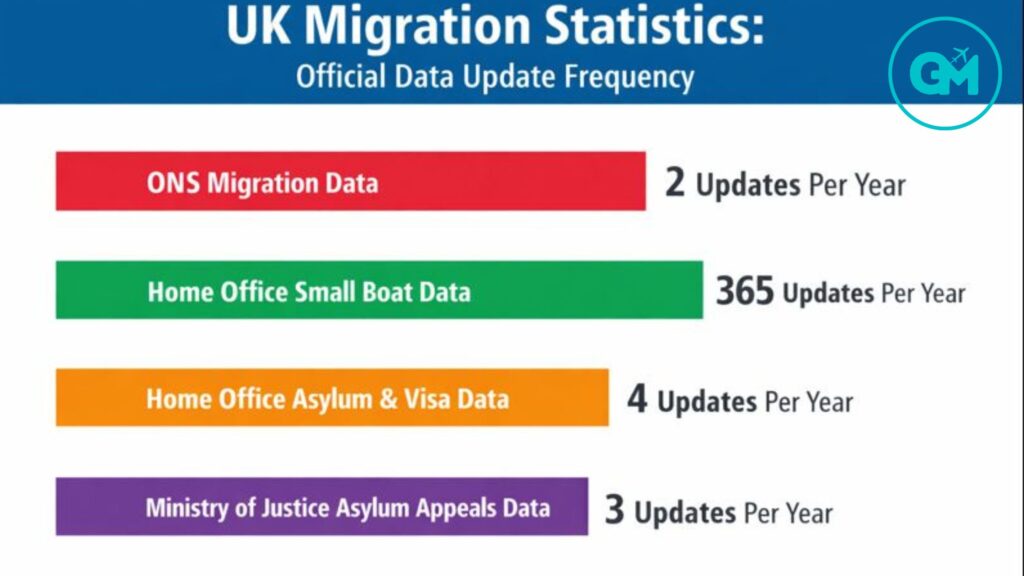
UK migration data comes from various departments. The ONS updates key migration figures twice a year. Small boat crossing data is updated daily by the Home Office. Asylum, visa, and return statistics are issued quarterly by the Home Office; asylum appeal outcomes are published every three months by the Ministry of Justice. Official data can be revised later as new information emerges.
The ONS defines a long-term migrant as someone who has been abroad for at least 12 months. Immigration includes those entering for work, study, family, or humanitarian reasons. Emigration counts departures for similar durations.
Net migration reflects the balance between these two flows and is a key indicator policymakers use to assess population change and labour market pressure.
Visa Categories And What They Represent
Visa statistics count only approved visas, not actual arrivals, and do not track when people enter the UK. Renewals are listed separately, so one person may appear more than once in annual counts.- Work Visas: Work visas include permits for skilled workers, health and care workers, seasonal laborers, domestic workers, and youth mobility participants.
- Study Visas: Study visas cover sponsored students at licensed UK institutions and short-term study routes.
- Family Visas: Family visas allow people to join close relatives in the UK, including spouses, partners, children, and parents.
- Other Visa Categories: The “other” category includes humanitarian and special routes, such as the Ukraine Sponsorship Scheme and British National Overseas visas, as well as EU and EEA family permits.
Asylum Applications And Accommodation Data
The Home Office publishes data on asylum seekers in contingency accommodation, such as hotels and other facilities. Backlog figures include applicants and their dependents waiting for an initial decision, while appeal statistics refer to individuals with ongoing legal challenges.
Small Boat Crossings And Irregular Arrivals
Small boat crossings are documented daily by the Home Office. Entering the UK without permission constitutes a breach of immigration law. However, individuals seeking asylum on arrival are generally not prosecuted for illegal entry.
Deaths and disappearances linked to Channel crossings are tracked by the International Organisation for Migration (IOM), based on media and official reports, though the IOM notes these figures are incomplete.
Other irregular arrivals, such as undocumented air arrivals or port detections, are recorded separately from small-boat statistics.
Returns And Deportations
Return statistics exclude those refused entry at the border. Returns are classified as enforced removals, voluntary returns, and other verified departures.
Non-British nationals returned after criminal convictions are reported separately.
Comparing UK Migration With Other Countries
International comparisons use sea arrival data from the UNHCR European dashboard and asylum, immigration, and emigration statistics from Eurostat.
To maintain comparability, countries with populations under 1 million are excluded, and net migration comparisons include only countries that count asylum seekers in immigration totals, such as France, Germany, Belgium, Greece, and Spain.
UK population figures are sourced from the ONS, the National Records of Scotland, and the Northern Ireland Statistics and Research Agency.
Key Takeaway
UK migration patterns show a gradual return to pre-pandemic levels, with falling net migration and ongoing pressures from asylum claims, visa demand, and irregular entries. Knowing how these numbers are collected and read is key to assessing policy trends and public discussion.
Current migration data underscores the complexity of top-level numbers. Though net migration is falling, pressures persist in asylum systems, labor markets, and border enforcement.
Was this helpful?
Thanks for your feedback!